
Door to Door: Making Leaflets Work in 2026
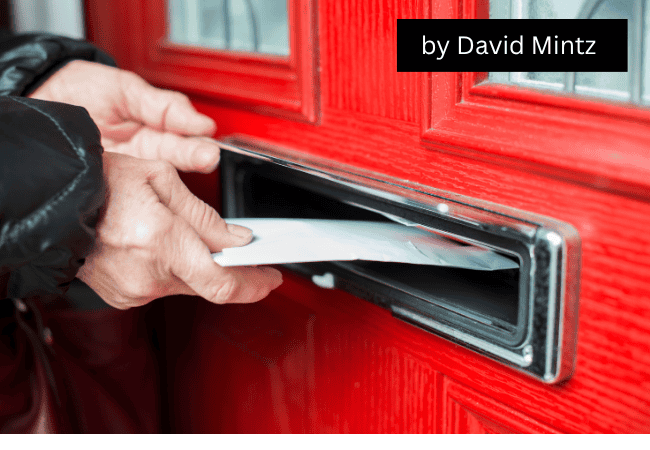
Do Leaflets Still Work for Estate Agents?
Yes — but not for the reason most people think. Leaflets don’t win instructions on their own. They give you a chance to be chosen. And that’s a very different thing. This guide cuts through the noise and shows you exactly how to make leafleting work as a self-employed agent — when everyone else is saying the same thing.
The Real Problem: Everyone’s Saying the Same Thing
What most agents write
Stand at any letterbox in the UK for a week and you’ll see it immediately. Estate agents, takeaways, and local councillors all landing on the same doormat — all asking for the same thing in slightly different language: pick me. Most agent leaflets follow the exact same script. “Local experts.” “Trusted service.” “Free valuation.” And the reality is, none of it cuts through anymore — not because it’s wrong, but because it’s expected. When every agent says the same thing, the homeowner has no reason to choose anyone. So they don’t. They ignore it.
What homeowners are actually asking
Leafleting isn’t really a marketing exercise. It’s a trust exercise. When someone receives your leaflet, they’re not asking “is this well designed?” or “is this agent experienced?” They’re asking something far simpler: “Why should I use you instead of the other five agents I already know?” If your leaflet doesn’t answer that clearly and quickly, it goes straight in the bin. Most agents focus on format, size, and print quality. But the truth is the leaflet isn’t the differentiator. You are
Stop Writing Like an Agent — Start Showing Up Like a Neighbour
The agents who make leafleting work don’t sound like companies. They sound like people. As a self-employed agent, your biggest advantage isn’t your service — it’s your proximity and relatability. You li


What doesn’t work
“We are your local property experts.” It’s vague, it’s expected, and it sounds like every other agent in the postcode. There’s nothing here that makes a homeowner pause and think — that sounds like someone I already know.
What actually works
“I live just round the corner. I walk this road most days. I’ve just sold a house nearby and still have buyers looking here.” That shift matters enormously. People don’t instruct brands. They instruct people they feel they already know.
How to Make Leafleting Actually Work
If you’re going to do it, do it properly. Here are the five things that separate leaflets that convert from leaflets that get binned.
(1) Lead With Proof, Not Promises
Generic claims don’t convert. Specific, local evidence does. “I’ve just sold No.14 on your road” or “I achieved £X and still have buyers looking here” immediately answers the question every homeowner is really asking: why you? But if you don’t have stock yet, don’t panic — your proof is YOU. Your connection to the area, why you chose to work there, what you love about it, and why selling homes there matters to you personally all count as proof too. Emotional authenticity and local passion are a form of proof because they show you’re not just another agent parachuting in. Try language like: “I grew up on this road.” “I’ve lived here for 12 years — I know every street, every school, every reason people choose to stay.” “I’m not here because it’s a good postcode. I’m here because it’s my community.” That kind of honesty builds trust when you don’t yet have recent sales to point to.
(2) Make It Hyper-Local
Not “covering your area.” Your street. Your patch. Your people. The more it feels like it was written specifically for the person holding it, the more likely it gets read. Reference road names, recent sales nearby, or something genuinely specific to the neighbourhood. Familiarity breeds attention.
(3) Make It Personal
Your name. Your face. Your voice. Not a logo hiding behind generic copy. Include a photo of yourself — ideally somewhere recognisable locally. Write in first person. Let people feel like they’re hearing from a real human being, not a corporate brand trying to sound approachable.
(4) Keep It Simple
One message. One outcome. Usually something like: “If you’re even thinking about moving, let’s have a quick conversation.” Not ten services. Not a brochure. Not a feature list. Just one clear, low-pressure reason to act. The simpler it is, the more likely someone actually does something with it.
(5) Repeat It Consistently
One leaflet doesn’t build trust. Familiarity does. When someone sees your name for the third or fourth time, something changes. You stop being “another agent” and become recognisable. And recognisable turns into trusted. Plan a consistent cadence — not a one-off drop and hope for the best.
The Question to Answer Before You Design Anything
If you’re thinking about leafleting, don’t start with design. Don’t start with paper stock or whether to go A5 or DL. Start with one honest question: Why should someone choose me over every other agent they already know? Write that answer first. Make it local. Make it human. Make it specific. Then build your leaflet around that single truth. Because the agents who make leaflets work aren’t the ones with the best print quality or the most eye-catching design. They’re the ones who feel like the obvious choice before the phone even rings.
Start here: Write down three genuinely specific, local reasons why a homeowner on your target street should choose you. If you can answer that clearly, you’ve already got the bones of a leaflet that will actually work.
And If You’ve Come This Far…
Leaflet drops are a good start. Crude, useful, and better than doing nothing. But they’re not the most effective tool in the box — not by a long way. The agents who consistently win instructions aren’t just leafleting. They’re running targeted letter-writing campaigns that feel personal, land at exactly the right moment, and convert at a completely different rate. Ready to level up to something more interesting?
Email me at david@davidmintz.co.uk with the subject line Golden Triangle Campaign — and I’ll share something with you that always works
PRIVATE COACHING
David provides bespoke training and mentoring